

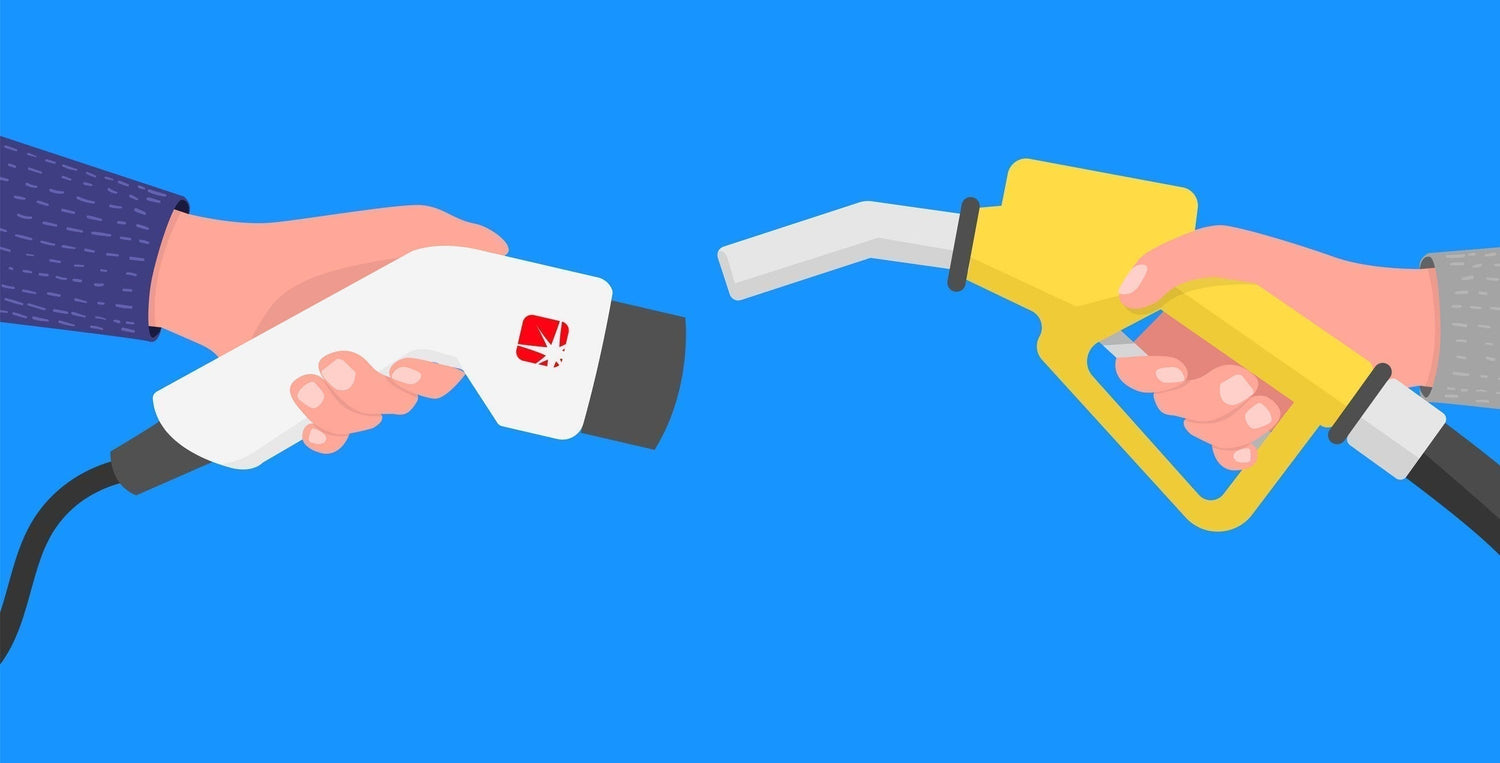
La réponse à cette question populaire est simple : une petite fortune, surtout si vous connaissez les meilleurs moments pour recharger votre téléphone à domicile.
La première question que se posent souvent les personnes qui envisagent de passer d'un véhicule à moteur thermique à un véhicule électrique est : « Combien vais-je économiser ? » La réponse, complexe, inclut le coût d'achat du véhicule électrique ainsi que les différentes aides et subventions disponibles dans votre région, qui peuvent réduire considérablement le coût total de possession.
Dans cet article, nous nous en tiendrons à la réponse simple, basée uniquement sur les économies que vous réaliserez à la pompe.
Trouver les meilleurs tarifs de recharge
Comme les prix de l'essence, les tarifs de l'électricité varient en fonction de votre lieu de résidence, de l'heure de la recharge (jour ou nuit) et du lieu de recharge (à domicile ou à une borne de recharge publique).
Pour cette comparaison, notre véhicule électrique est rechargé à domicile à l'aide d'une borne de recharge en courant alternatif, comme la borne NEMA 40 A de Spark ou les bornes résidentielles câblées de 48 A ou 80 A. Les bornes de recharge en courant alternatif de Spark bénéficient d'une garantie de 5 ans, la meilleure du secteur, et sont compatibles avec l'application innovante Spark AC App, qui permet d'optimiser les temps de charge. Cette application est conçue pour vous aider à recharger votre véhicule électrique aux heures creuses afin de maximiser vos économies et de minimiser vos coûts d'électricité, que vous soyez chez vous ou à l'étranger.
Les tarifs d'électricité les plus avantageux sont proposés en heures creuses, notamment la nuit. Recharger son véhicule électrique à domicile pendant la nuit offre une grande flexibilité en matière de tarifs et s'avère souvent la solution la plus pratique ; c'est pourquoi l'acquisition d'une borne de recharge résidentielle est une priorité pour la plupart des propriétaires de véhicules électriques.

Comparaison des coûts d'exploitation du carburant
La comparaison suivante est basée sur un trajet domicile-travail quotidien typique de 72 km (45 miles) pendant 20 jours ouvrables par mois. Nous avons utilisé les tarifs moyens canadiens (Toronto et Ontario) du carburant et de l'électricité pour effectuer les calculs suivants :
Scénario ICE
- Consommation de carburant : ~8 L aux 100 km (moyenne pour une voiture compacte/intermédiaire)
- Consommation quotidienne de carburant : 72 km → 5,76 L
- Prix de l'essence : environ 137,9 ¢/L (moyenne à Toronto, le 16 juin 2025) ( toronto.citynews.ca , GasWizard )
- Coût journalier du carburant : 5,76 L × 1,379 $ = 7,95 $
- Mensuel (20 jours) : 7,95 $ × 20 = 159 $
Scénario de véhicule électrique
- Consommation d'énergie d'un véhicule électrique : ~0,20 kWh/km → 72 km/jour = 14,4 kWh/jour
- Tarif de recharge (ULO de nuit) : 2,8 ¢/kWh
- Coût journalier de l'électricité : 14,4 kWh × 0,028 $ = 0,40 $
- Coût mensuel : 0,40 $ × 20 = 8,00 $

Cela représente une économie de 95 % par mois en rechargeant à domicile la nuit. Votre moyenne variera selon les tarifs en vigueur dans votre région, mais les avantages potentiels d'un véhicule électrique rechargé à domicile sont indéniables.
Qu’en est-il de la facturation aux heures de pointe ?
Même si vous ne pouvez pas recharger la nuit, les économies restent considérables. Même avec un tarif d'électricité moyen (12,2 ¢/kWh), le coût mensuel de recharge de votre véhicule électrique serait d'environ 35 à 40 $, ce qui représente des économies importantes par rapport aux 151 $ payés à la pompe. ( energyshop.com , theguardian.com , hydroone.com , londonhydro.com )
Si vous envisagez l'achat d'un véhicule électrique, vous connaissez probablement déjà ses nombreux avantages environnementaux. Quoi de mieux que de contribuer à un environnement plus propre tout en réalisant des économies considérables sur le carburant et en allégeant votre budget mensuel ? C'est une situation gagnant-gagnant pour la planète et pour votre porte-monnaie.
Pour plus d'informations sur la gamme complète de chargeurs CA résidentiels innovants de Spark, couverts par notre garantie de 5 ans, la meilleure du secteur, cliquez ici .
Références :
Gas Wizard (Toronto) : Prévoit un prix de l'essence ordinaire de 138,9 ¢/L le 16 juin 2025
Ministère du Développement du Nord, des Mines, des Ressources naturelles et des Forêts de l'Ontario : Affiche les prix à la pompe à Toronto en mai 2025, à 136,3 ¢/L, offrant un contexte provincial
Commission de l'énergie de l'Ontario / Hydro One / Toronto Hydro :
Ultra-basse nuit (ULO) : 2,8 ¢/kWh par nuit (23h – 7h)
Moyenne de pointe (TOU) : 12,2 ¢/kWh
Grille tarifaire de London Hydro : Confirme le prix ULO de nuit à 0,028 $/kWh , en moyenne pointe à 0,122 $/kWh , en heures creuses à 0,076 $/kWh et en heures de pointe à 0,284 $/kWh.
Voiture thermique compacte/intermédiaire (~8 L/100 km) :
Ressources naturelles Canada Le guide de consommation de carburant fournit des cotes de consommation de carburant combinées pour les véhicules à essence compacts et intermédiaires typiques, d'environ 8 L/100 km.
VE (~0,20 kWh/km) :
Wikipédia – Efficacité énergétique dans les transports Selon certaines sources, une Tesla Model 3 consomme environ 15 kWh/100 km , soit 0,15 kWh/km.
Les autres véhicules électriques grand public (par exemple la Nissan Leaf, la Chevrolet Volt) se situent généralement dans la plage de 15 à 20 kWh/100 km (soit 0,15 à 0,20 kWh/km ).