


Installing electric vehicle charging in Québec? ÉcoRecharge covers 50 % of eligible project costs.
Up to $500,000 per business, per site. ÉcoRecharge supports Québec businesses, municipalities and eligible organizations installing Level 2 and DC fast charging for fleets and workplaces. Soneil Spark commercial chargers are already on Québec’s eligible model list.
Deux minutes · two minutes
Tell us about your project.
Two minutes. We come back within two business days with what ÉcoRecharge would cover on your project and what the application involves.
Merci. We have your details.
We have your details and we will come back within two business days with what your project could qualify for and what the application involves. If it is urgent, reply to the confirmation email and it will reach us directly.
- We check your charger against the current Québec list before you order.
- Nous répondons en français ou en anglais, à votre choix.
What the program pays
Quebec EV charger rebate amounts for business and organization projects.
What you receive depends on your project costs, your charger model and current program terms.
Charger acquisition, installation and electrical infrastructure.
Per business and per site, for the duration of the current normative framework.
Of eligible external consultant costs for a fleet electrification or charging analysis.
For Level 2, assistance cannot exceed twice the purchase cost of the chargers. For DC fast chargers it cannot exceed the purchase cost. Expenses must fall on or after 1 January 2024. Eligible costs cover the charger, installation, electrical supply, commissioning, an energy management system, professional fees and protective bollards. Generators, batteries, solar, energy storage, taxes, maintenance and network fees are not.
Administered by the Gouvernement du Québec. Funding amounts, eligibility and availability are set by the ÉcoRecharge program, not by Soneil Spark, and are confirmed when you apply.
The order Québec requires
In Québec you install and pay first, then apply.
ÉcoRecharge is not a pre-approval program. For a standard project the chargers must already be installed and the expenses paid when you apply. Assistance arrives in one instalment once your documents are validated. Keep them for three years after payment.
- 1InstallChargers installed and commissioned at your site.
- 2PayEligible expenses paid and invoiced before you apply.
- 3ApplySubmit the application; assistance is paid in one instalment after validation.
You can ask the administrator about a project agreement before you build, which can release funding during the project rather than after. If your project is that size, start that conversation first. Tell us on the form and we will point you to it.
Eligible charger models
Our commercial chargers are on Québec’s list.
Québec only funds charger models on its published eligible list. A charger that is not on it will not be funded, however good the project is. Our commercial Level 2 units are listed.
- Connected Level 2, from 1 April 2026. Units bought after that date must be connected chargers on the eligible list, though an energy management system can stand in.
- DC fast chargers are eligible too. From 1 April 2026 they must be approved by certification, not by special evaluation.
- New units only. A unit used for demonstration does not count as new when it is resold.
- Bought from a Canadian retailer.
On the ÉcoRecharge eligible model list
| Soneil Spark model | Model number on the label | Output |
|---|---|---|
| Spark AC Commercial 80A (hardwired) | AC-0160 HW | 19.2 kW, adjustable |
| Spark AC Commercial 48A (hardwired) | AC-0096 HW | 11.5 kW, adjustable |
| Spark AC 80A (hardwired) | AC-0160 HW | 19.2 kW, adjustable |
| Spark AC 48A (hardwired) | AC-0096 HW | 11.5 kW, adjustable |
| Spark AC 40A NEMA | AC-0080 NE | 9.6 kW, adjustable |
Engineered, Tested & Assembled in Canada, 2025 models. The program asks for the model number exactly as it appears on the compliance label, which is the column above. We check the current list against your project before you order.
ÉcoRecharge funds DC fast chargers as well, from its separate eligible BRCC list. Soneil Spark DC units are not on that list yet. If your project needs DC fast charging, tell us on the form and we will say where that stands.
Commercial electric vehicle chargers, engineered, tested and assembled in Canada
We build the chargers. We will map them to the program.
Soneil Spark builds Level 2 electric vehicle charging stations and Level 3 DC fast chargers in Brampton, Ontario, and our commercial Level 2 units are already on Québec’s eligible model list. Tell us about your site and we come back with the setup that fits and what the program would contribute.

Level 2 AC
Level 2 EVSE · AC-0160 HW · up to 19.2 kW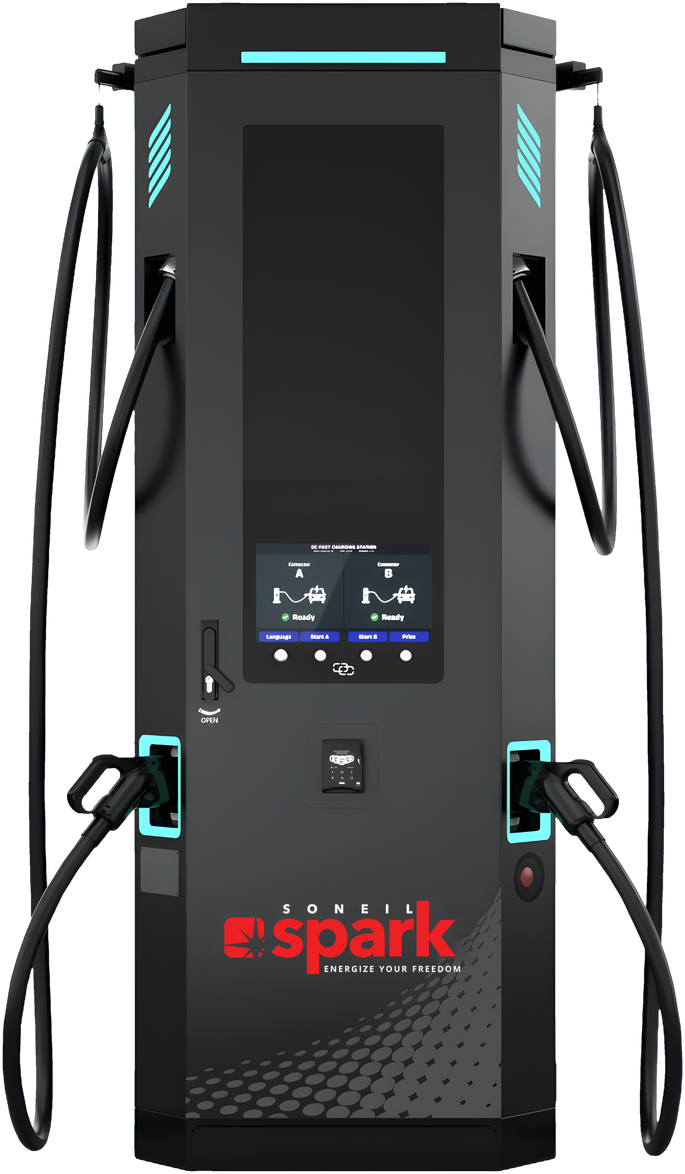
DC fast charging
Level 3 DC · 120 – 480 kW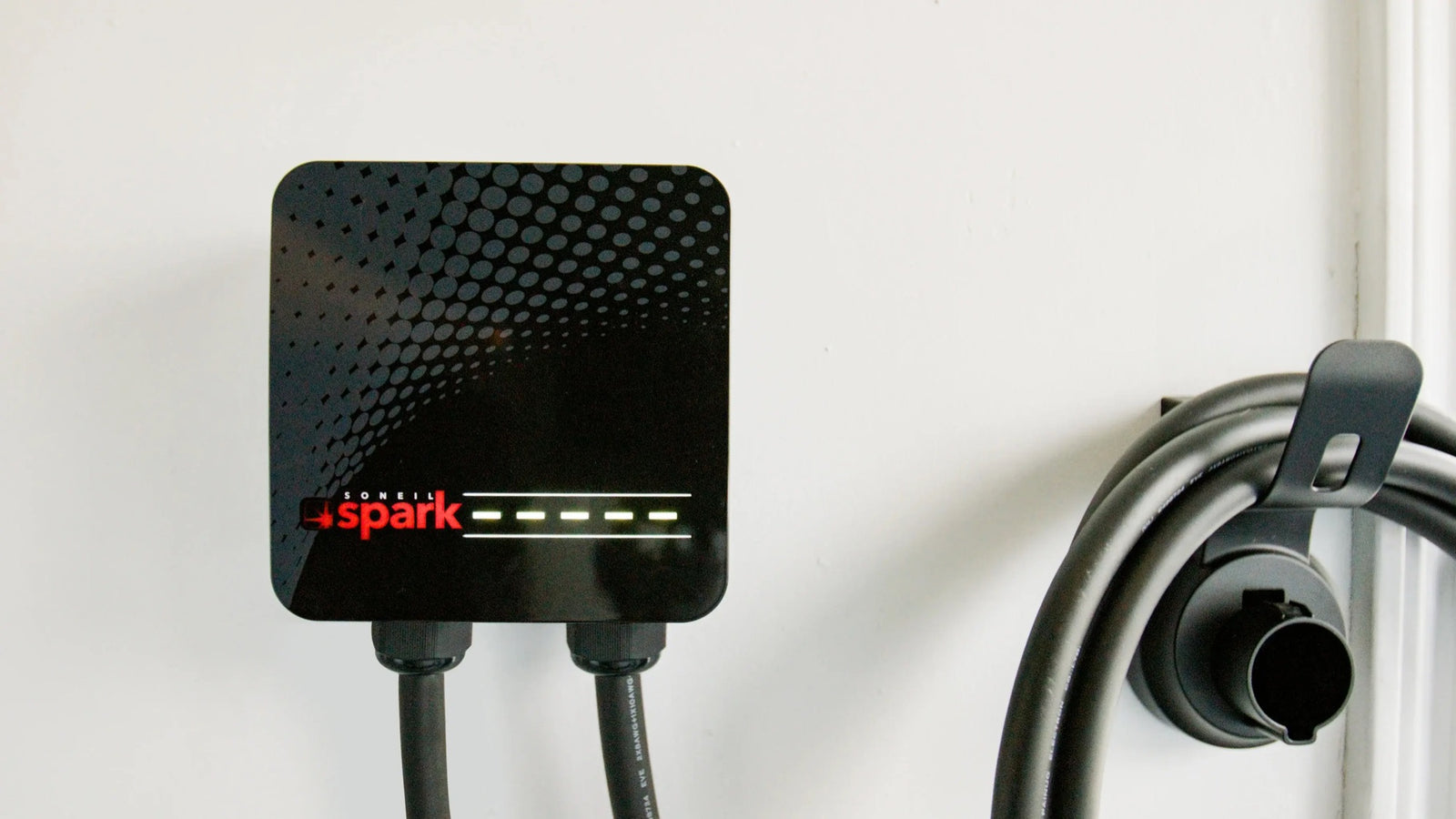
Wall-mounted EVSE
Indoor or shelteredOur Level 2 units are on Québec's eligible list today. DC fast chargers are funded by the program from its own list, and our DC units are not on it yet.
Not sure where your project sits?
Send us the project and we come back within two business days: the install-then-apply sequence, whether your charger is on the eligible model list, and the records you keep for three years. In English or French.
Questions
The Quebec EV charger rebate, answered.
The six questions Québec projects run into first, starting with the one that catches everybody: you install before you apply. Nous répondons aussi en français.
Do I apply before or after installing the chargers?
After. ÉcoRecharge is not a pre-approval program. For a standard installation project the chargers must already be installed and the expenses paid when you submit. Assistance is paid in a single instalment once your supporting documents are validated. This is the opposite of British Columbia, so do not apply the B.C. sequence to a Québec project.
How much is the Quebec EV charger rebate?
50 percent of eligible costs, to $500,000 per business per site for the life of the current framework. For Level 2, assistance cannot exceed twice the purchase cost of the chargers; for DC fast chargers it cannot exceed the purchase cost. A separate stream covers 75 percent of external consultant costs for a fleet or charging analysis, to $30,000 per establishment.
Does my charger have to be on a list?
Yes. Québec funds only models on its published lists, one for Level 2 and one for DC fast. Our commercial Level 2 units are listed (AC-0160 HW and AC-0096 HW). Units bought after 1 April 2026 must be connected, though an energy management system can stand in. They must be new and bought from a Canadian retailer.
What if my project is over $150,000?
There is a different route. Ask the administrator about a project agreement before you build, which can release funding during the project rather than only after. If your project is that size, start there.
Who is eligible?
Québec businesses, municipalities, and private and public organizations installing charging for fleets and workplaces. Residential-only buildings are not covered. Businesses that sell, rent, design, repair or manufacture chargers or EVs are limited to two Level 2 stations per establishment.
Does ÉcoRecharge cover DC fast charging as well as Level 2?
Yes. The business and organization stream covers both, each from its own eligible model list. The caps differ: Level 2 assistance cannot exceed twice the purchase cost, DC fast cannot exceed it. For a DC charger serving light vehicles, the program may ask for an analysis justifying that power level.
Is commercial EV charger installation covered, or only the hardware?
Both. ÉcoRecharge counts purchase and installation as eligible project costs, including the electrical work. What it costs depends on the run to the panel, the trenching and whether the service needs upgrading, so we price it per site.
What is Level 2 charging, and how does it differ from DC fast charging?
A Level 2 electric vehicle charger runs on 208 or 240 volt AC, typically 40 to 80 amps, and adds roughly 30 to 80 km of range an hour. It suits vehicles parked for a shift or overnight. A Level 3 electric vehicle charger, usually called DC fast charging, feeds DC straight to the battery at 120 kW and up and turns a charge around in well under an hour. Both are EVSE. Most sites end up with Level 2 for the parked fleet and one DC unit for quick turnarounds.
Do the chargers do load management, and can I manage them remotely?
Yes. Our commercial stations are networked and speak OCPP, so they work with third party management software as well as our own. Load management lets several chargers share one service, which often avoids a service upgrade and is the cheapest way to add ports. Remote monitoring, access control, usage reports and firmware updates are all handled from the dashboard, and maintenance is covered by the warranty.
Do I need a permit to install a commercial EV charger in Québec?
Yes. Commercial EV charger installation is electrical work and needs a permit and an inspection, done by a contractor licensed in Québec. It also matters for your claim: ÉcoRecharge pays on paid invoices for a completed install, so an uninspected job can cost you the assistance as well as a fine. We handle the permit and inspection as part of the job.

Funding and eligibility
Funding amounts, eligibility and availability are set by the Gouvernement du Québec ÉcoRecharge program, not by Soneil Spark. What you receive depends on your project, the charger model and current program terms. Nothing here is a guarantee of approval.