


EV charging in the NWT?
The territory covers half, if you finish by December.
The NWT Electric Vehicle Infrastructure Program pays up to 50 percent of eligible project costs: $7,500 per Level 2 connector, $99,999 per fast charger. Every project must be complete by 31 December 2026, so the calendar decides this one, not the budget.
Two minutes
Can your site still make the December deadline?
Tell us where the site is and what you want to put in. Two business days for a straight answer on whether it can be finished in time.
Thanks. We have your details.
We will come back within two business days on whether your site can still land in this cycle, and what it would take. If it is urgent, just reply to the confirmation email.
- A straight answer on the deadline, not a sales pitch.
- No obligation, and no quote until we understand the site.
Funding amounts
What the NWT program pays.
Up to half the eligible project cost, capped per unit installed. The caps are the same whoever applies; there is no enhanced tier here.
Charger purchase and installation, under the program's eligible-cost rules.
Level 2 at 3.3 to 19.2 kW, counted per connector, not per station.
DC fast charging, per charger installed.
Eligible locations are public places and street parking, multi-unit residential buildings, workplaces, and light-duty fleet facilities. The fleet stream is light-duty only, so heavy-duty depot charging falls outside it. Applicants must be incorporated or registered in Canada, including businesses, utilities, academic institutions, not-for-profits, Indigenous governments and organizations, and GNWT bodies.
Funded by the GNWT and the Government of Canada. Delivered by NWT Infrastructure under Natural Resources Canada's Zero Emission Vehicle Infrastructure Program. Amounts and eligibility are set by the program, not by Soneil Spark, and confirmed when you apply.
The constraint that decides it
Every project must be complete by 31 December 2026.
Not applied for by then. Finished. Between here and there sits an approved application, equipment on site in the North, an available electrician and a final inspection. For some sites that will not fit, and we would rather say so now than take an order we cannot deliver.
- 1Choose your streamSimplified for up to two Level 2 connectors; detailed for three or more, or any Level 3.
- 2ApplyApplication form for both streams, plus a proposal form and supporting documents for detailed.
- 3Build and finishInstalled, commissioned and complete by 31 December 2026.
Tell us anyway. We will say so plainly, keep you on the list for the next intake, and point you at what else applies. The federal ZEVIP funds projects across Canada on its own timetable.
Commercial EV chargers, made in Canada
We build the chargers, and we build them for cold.
Soneil Spark builds Level 2 AC stations and DC fast chargers in Brampton, Ontario. Our Level 2 units run to 19.2 kW, the top of the band this program funds. Tell us the community, the site and the service you have, and we come back with what fits.


Level 2 AC
40 – 80A · up to 19.2 kW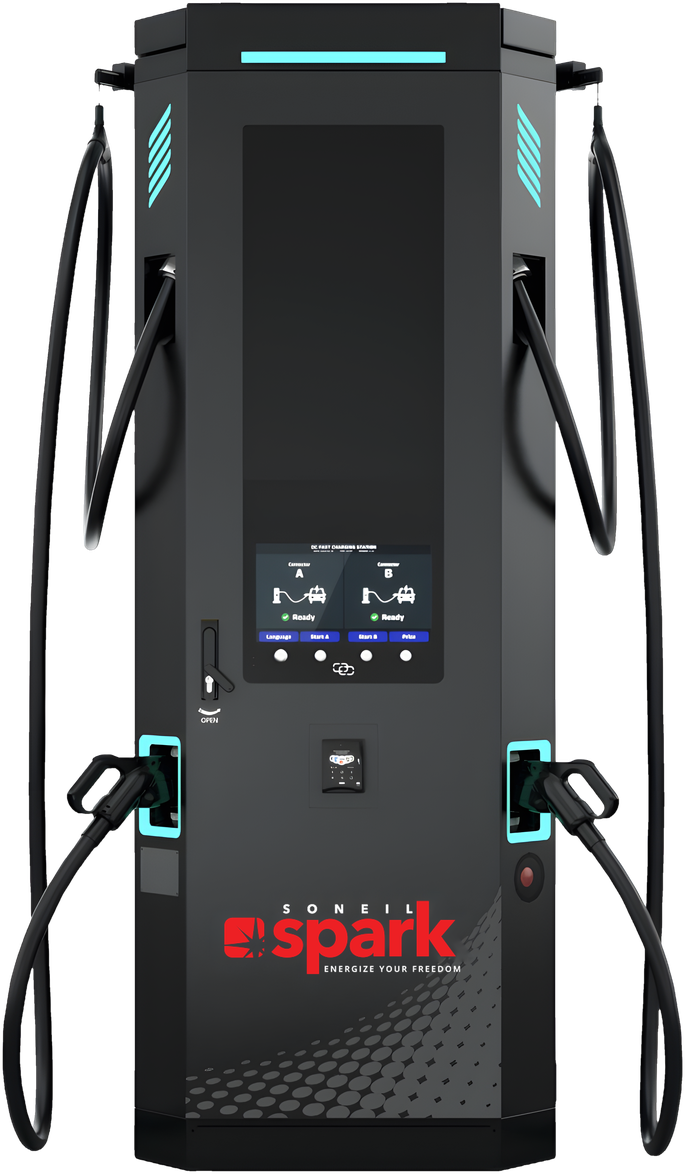
Level 3 fast charging
120 – 480 kW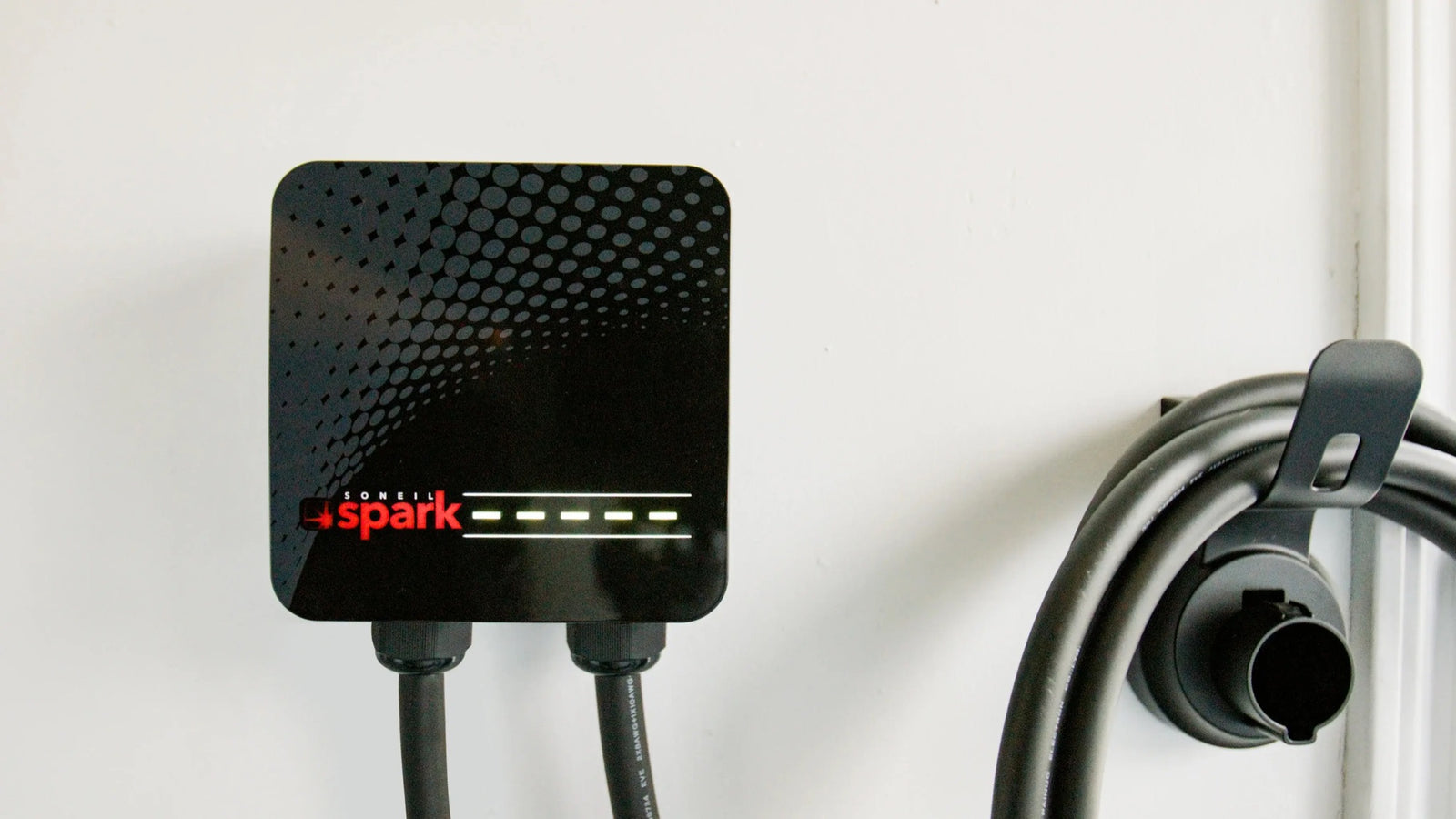
Wall-mounted
Indoor or shelteredWhich charger fits depends on the service at the site and how the vehicles are used. In the North it also depends on what can be delivered and installed inside the window.
Will your site make it, or not?
Send us the community, the site and what you want to install. Two business days for a straight answer.
Questions
The NWT program, answered.
The six things northern applicants ask first, starting with the deadline, because for most projects that is the answer.
How much does the NWT program pay?
Up to 50 percent of eligible project costs, to a maximum of $7,500 per Level 2 connector and $99,999 per Level 3 fast charger.
What is the deadline?
Every project has to plan to be complete by 31 December 2026. That is the constraint that decides most projects. An install needs an approved application, equipment, an electrician and an inspection, so a project starting now is tight. Tell us your site and we will give you a straight answer.
Who can apply?
Incorporated or registered entities in Canada: businesses and industries, utilities, academic and research institutions, for-profit and not-for-profit organizations, community and Indigenous governments and organizations, and GNWT departments, agencies and Crown corporations.
Which sites qualify?
Public places and street parking, multi-unit residential buildings, workplaces, and light-duty vehicle fleet facilities. The fleet stream is light-duty, so heavy-duty depot charging is not covered.
Is there more than one way to apply?
Two streams. Simplified covers up to two Level 2 connectors and needs only the application form. Detailed covers three or more connectors, or any Level 3 charger, and adds a proposal form and supporting documents.
Who funds it?
The Government of the Northwest Territories with the Government of Canada, through Natural Resources Canada's Zero Emission Vehicle Infrastructure Program. The NWT EVIP coordinator is at NWTEVIP@gov.nt.ca or (867) 767-9021 extension 32055.

Funding and eligibility
Funding amounts, eligibility, deadlines and availability are set by the Government of the Northwest Territories and Natural Resources Canada, not by Soneil Spark, and depend on funding remaining available. Confirm the current intake status with the NWT EVIP coordinator before committing. Nothing on this page is a guarantee of funding.