

Charging in Atlantic Canada?
CHARGED covers half the bill.
Pollution Probe's CHARGED program pays up to 50 percent of the purchase and installation cost of new EV charging, to $100,000 per site, for projects in Nova Scotia and Newfoundland and Labrador. The 2026/27 window is open and funding is first-come, first-served.
Two minutes
Tell us about your site.
Two minutes. We come back within two business days with what CHARGED would cover on your site and what the application involves.
Thanks. We have your details.
We will come back within two business days with what CHARGED would cover on your site. If it is urgent, just reply to the confirmation email.
- The tier your site actually falls in, not a headline number.
- No obligation, and no quote until we understand the site.
Funding amounts
What CHARGED pays, by charger output.
Funding follows the charger output and whether the applicant is an Indigenous community. These are the maximums per unit; the site cap sits on top.
| Charger output | Standard (up to 50%) | Indigenous communities (up to 75%) |
|---|---|---|
| Level 2 3.3 to 19.2 kW | $5,000 per connector | $7,500 per connector |
| Fast charger 20 to 49 kW | $15,000 | $22,500 |
| Fast charger 50 to 99 kW | $50,000 | $75,000 |
| Fast charger 100 kW and above | $75,000 | $99,999 |
Maximum funding is $100,000 per project site, however many chargers you put in, though you can apply separately for each site. For Indigenous applicants and for governments, the stacking limit is 100 percent of project costs. Individuals, single-family homeowners and federal departments are not eligible this round.
Delivered by Pollution Probe, funded by Natural Resources Canada. CHARGED is a delivery stream of NRCan's Zero Emission Vehicle Infrastructure Program. Amounts and eligibility are set by the program, not by Soneil Spark, and confirmed when you apply.
Sign first, spend second
Nothing you spend before the agreement counts.
A project that begins, or spends anything, before the funding agreement is signed is not eligible. Only expenses between 1 April 2026 and 31 March 2027 count, and every station must be operational by 31 March 2027. Funding arrives in one lump sum once you submit paid invoices, proof of site access and before-and-after photos.
Commercial EV chargers, made in Canada
We build the chargers. We will map them to the program.
Soneil Spark builds Level 2 AC stations and DC fast chargers in Brampton, Ontario. Our Level 2 units run to 19.2 kW, the top of the band CHARGED funds, and our DC units sit in the top tier. Tell us your site and we come back with what fits.


Level 2 AC
40 – 80A · up to 19.2 kW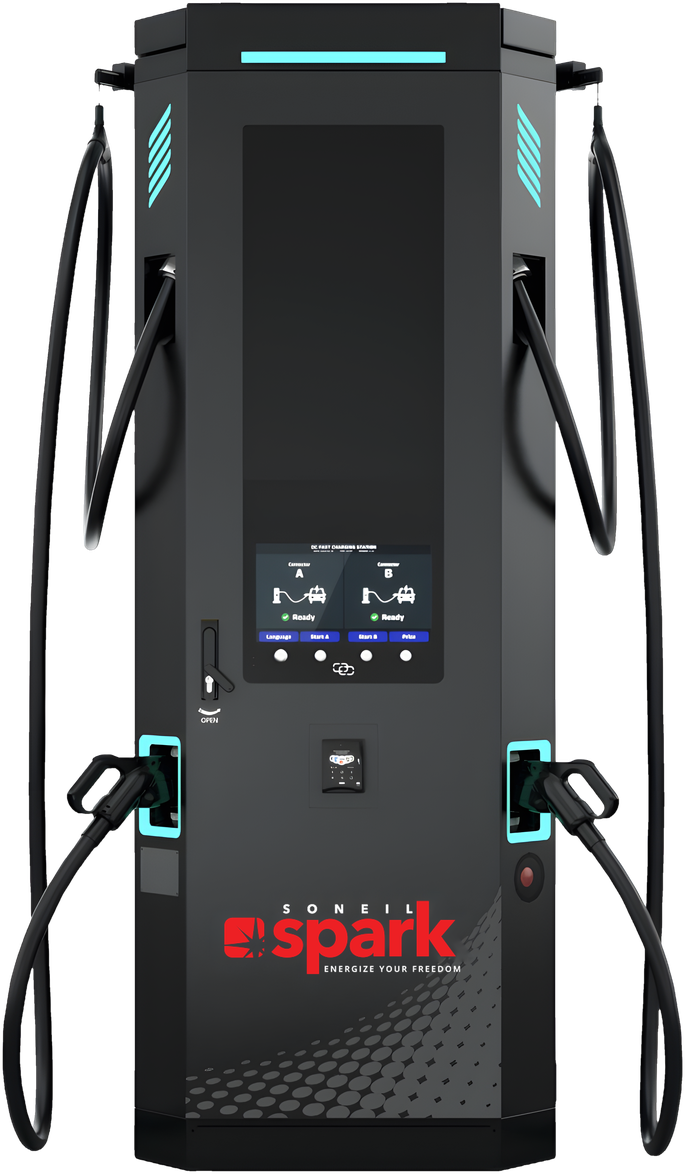
DC fast charging
120 – 480 kW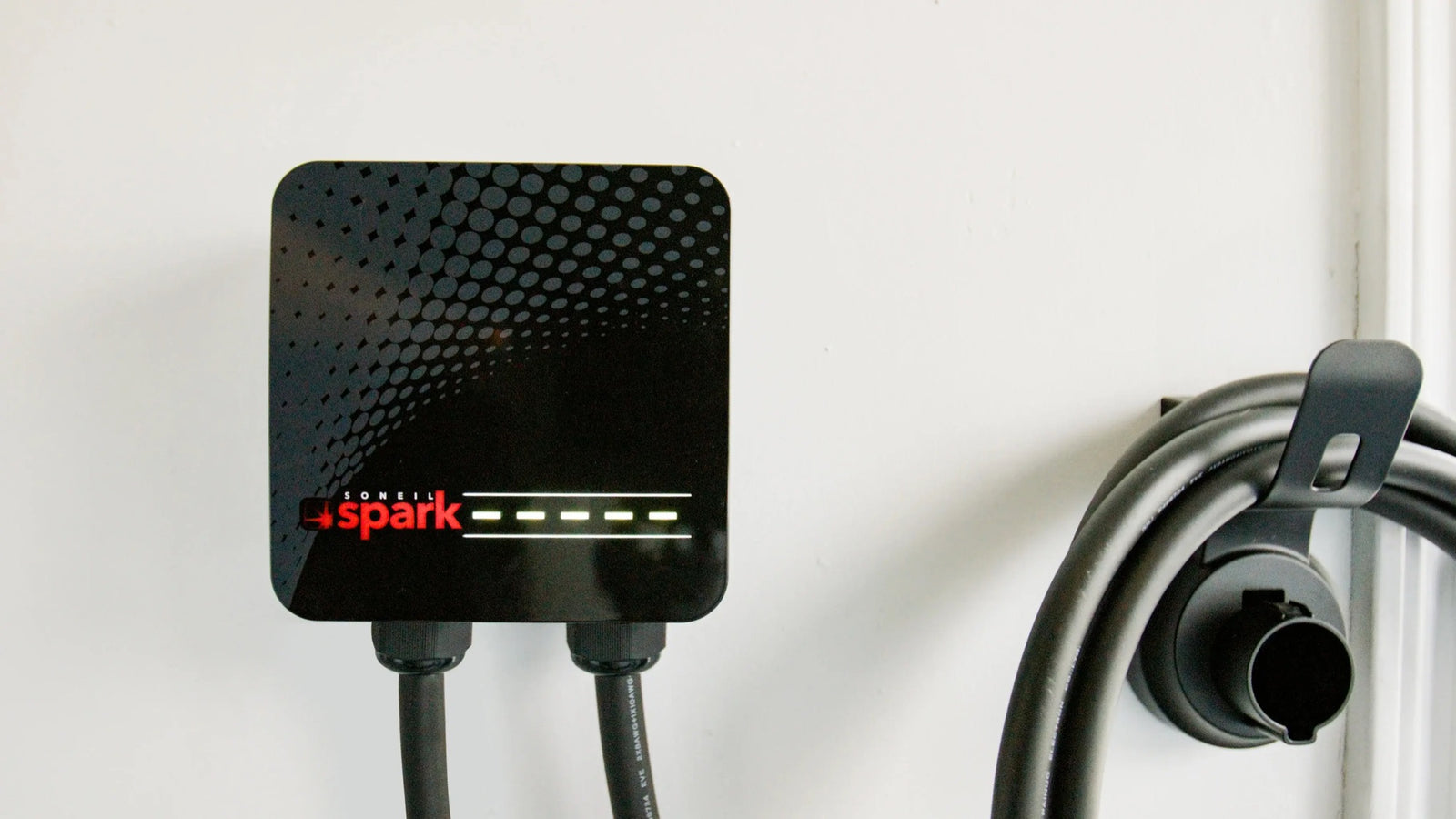
Wall-mounted
Indoor or shelteredEvery station funded under CHARGED has to be connected, and DC units need a CHAdeMO or CCS connector. Both are standard on what we build.
Not sure which tier your site falls in?
Send us the site and we come back within two business days with the tier it lands in, the signed-agreement trap and what the March 2027 clock means for your build.
Questions
CHARGED, answered.
The six things Atlantic Canadian applicants ask first, starting with the one that catches people out: spending money before the agreement is signed.
Who can apply to CHARGED?
Legal entities incorporated or registered in Canada: companies, utilities, multi-unit residential owners and operators, research, industry and standards associations, Indigenous and community groups, academic institutions, and provincial, territorial, regional or municipal governments. Individuals, single-family homeowners and federal departments are not eligible this round.
How much does CHARGED pay per charger?
Up to 50 percent of eligible costs: $5,000 per Level 2 connector, then $15,000, $50,000 and $75,000 per fast charger by output band. Indigenous communities get up to 75 percent, to $7,500 per connector and $99,999 per fast charger. Total funding caps at $100,000 per site.
Do I have to apply before I buy anything?
Yes. A project that begins, or spends anything, before the funding agreement is signed is not eligible. Only expenses between 1 April 2026 and 31 March 2027 count, and every station must be operational by 31 March 2027.
Which provinces does it cover right now?
Nova Scotia and Newfoundland and Labrador. The program is prioritising under-served locations in those two provinces for 2026/27, and funding is first-come, first-served.
What kind of chargers qualify?
Stations must be connected, meaning they can communicate with other stations or a server and report usage. DC fast chargers need at least one CHAdeMO or CCS connector. Stations must be owned by the applicant, on a new or expanded site rather than replacing existing chargers.
Can I apply for more than one site?
Yes. The $100,000 cap is per project site, and you are welcome to submit a separate application for each site you are planning.

Funding and eligibility
Funding amounts, eligibility and availability are set by Pollution Probe and Natural Resources Canada, not by Soneil Spark, and depend on funding remaining available. It is awarded first-come, first-served. Nothing on this page is a guarantee of funding.