

A guide to getting started
More and more companies are converting their fleets to electrical power from traditional gasoline or diesel vehicles, and the advantages are clear: Reduced operating costs; reduced emissions; aligning business with a cleaner, more sustainable future.
But is electrification right for your business? Soneil Spark can help you answer that question and support your fleet through our premium AC and DC products, but first business owners should take the following into consideration.
Cost of Ownership
What are the real long-term costs, not just the upfront costs? Electrifying your fleet can add cost up front but save considerable operating costs over time.
-
Grants and Incentives: Federal, provincial and state incentives can often substantially offset the upfront cost of converting to electrification. In Canada, there are often incentives for fleet electrification and charging infrastructure so check current programs at the federal and provincial levels.
- Fuel cost savings: Fuel savings alone can immediately begin to off-set upfront EV investment as electricity is more economical—and more consistently priced—than gas or diesel.
-
Maintenance savings: Electric fleet vehicles generally require less maintenance than internal combustion vehicles as they have far fewer moving parties, do not require engine oil changes, and EV components such as brakes can last three times longer than brakes on internal combustion vehicles.

Is EV right for your business?
Where does your fleet operate? How far do your vehicles drive each day? Answering these questions will help determine which EVs you choose for your fleet to ensure you have enough range.
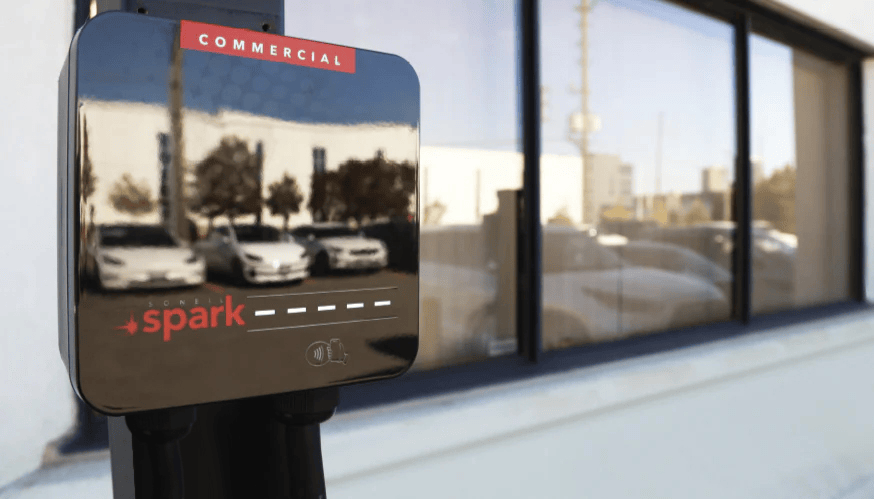
What about charging? If your fleet has a regular, repeatable route, setting up charging with fixed charging stations, such as Soneil Spark’s line of commercial AC chargers, is a cost-efficient solution. Fleets with open routes, or routes in off-grid areas, can benefit from Soneil Spark’s Mobile Charging Trailer, a remote solution for fleets with ever-changing routes.
Your Infrastructure
While most fleets utilize dedicated on-site charging stations, your planning should consider the following:
- On-site charging versus public charging: Most commercial fleets use dedicated chargers, but your facility might need electrical upgrades to support multiple high-power chargers, so make sure you check: Utility rates and demand charges, Site electrical capacity and Potential incentives for charging installation
- AC vs. DC fast charging:DC fast chargers recharge vehicles quicker than AC chargers, but DC chargers could require considerable costs to install.
-
Smart charging: Software, such as the Spark App and Spark commercial management software, can help you schedule charging during off-peak hours wherever your fleet charges to reduce costs.

Real-World Considerations
Electric vehicles offer a wide range of payload capacity, so make sure the EVs you are considering can carry what you need. Just like internal combustion vehicles, EV performance is impacted by payload—more weight requires more fuel to move—so keep that in mind when researching vehicle capacity.
- Repair expertise: Even though EV maintenance is generally less than internal combustion vehicles, make sure you have local service support.
- Testing: EV range varies with many factors, including payload, weather, terrain (mountainous or flat), driving style, and other factors, so real-world EV testing on your normal fleet routes should be part of your decision process.
- Charging Bottlenecks: Will you fleet need to charge at once, or can charging be staggered? If many vehicles need to charge at once, you could face high-power demand that impacts cost and operations. Know your specific needs.
Bottom Line
Fleet electrification can save considerable transportation costs and begin to repay your investment the day your EVs begin operations.
If you can install adequate charging infrastructure cost effectively, forecast usage to calculate total savings of EV ownership, and include plans for operational changes as EV charging becomes more accessible, your fleet business is a solid candidate for electrification.